Home › Vancouver, WA
Trash Chute Cleaning in Vancouver, WA
Trash Chute Cleaning Kings provides trash chute cleaning, garbage chute sanitizing, and chute odor control services in the Vancouver, WA area for both residential and commercial buildings, from mid-rise condos and apartment towers to hotels and hospitals. Contact us now for a free estimate.
How Much Does Trash Chute Cleaning Cost in Vancouver, WA?
Trash chute cleaning in Vancouver, WA costs anywhere from $450 to $1,680 on average for one chute in a typical apartment or condo building. The price depends on the number of floors and intake doors, how much buildup is inside, whether the compactor and trash room are included, access, and how often you schedule service.
Do You Cover All of Vancouver?
Yes, we take trash chute cleaning requests across Vancouver and the rest of the Portland-Vancouver-Hillsboro, OR-WA area. Labor and material costs here run about 12% above the national average, and the price range above already reflects that.
Do You Clean Trash Chutes in Apartment and Condo Buildings?
Yes, we clean trash chutes in apartment buildings, condos, co-ops, and senior living communities. Let us know how many floors and how many chutes the building has.
Do You Clean Trash Chutes in Hotels, Hospitals, and Office Buildings?
Yes, we clean chutes in hotels, hospitals, office buildings, dorms, and other commercial properties. Busy buildings like these often need cleaning more than twice a year.
Do You Service My Area?
Yes, we cover the Vancouver, WA area. Send us the property address and we'll confirm.
What Does Trash Chute Cleaning Include?
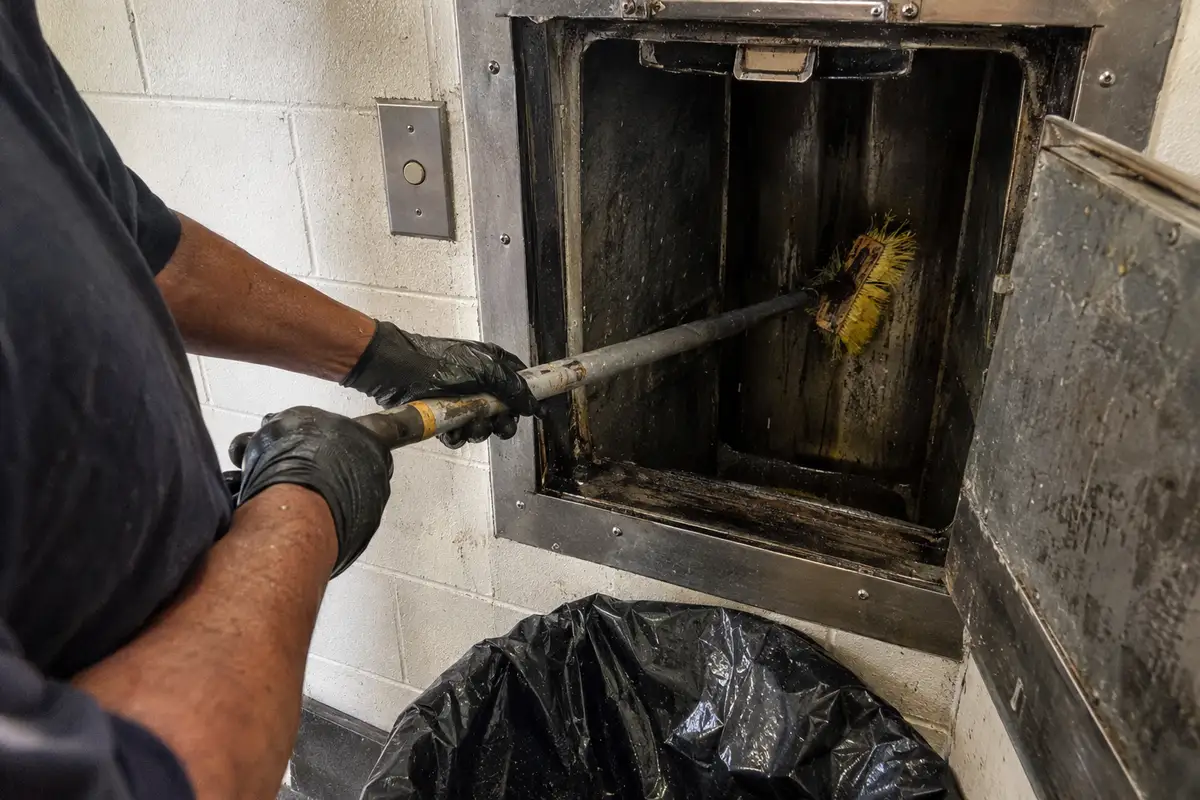
We degrease and pressure wash the chute from top to bottom, clean and disinfect the intake door on every floor, and deodorize. The compactor and trash room can be added.
How Often Should a Trash Chute Be Cleaned?
Twice a year is the usual standard for apartment and condo buildings. Hotels, hospitals, and busy high-rises often need it every three months.
Will Cleaning Get Rid of the Garbage Smell in the Hallways?
Yes, in most cases, because the smell comes from residue on the chute walls and doors. If it returns fast, we check for doors that don't seal, a dirty trash room, or a blocked roof vent.
Why Does My Trash Chute Smell So Bad?
Food and liquid leaking from bags leave a sticky film on the chute walls, and bacteria growing in it give off the smell. We find it builds up most at bends, where bags hit the wall.
Can You Help With Roaches, Flies, or Rats in the Chute?
Yes, our cleaning removes the food residue that roaches, flies, and rodents feed on. It isn't extermination, so keep your pest control company involved if there's an active infestation.
Do You Clean the Compactor and Trash Room Too?
Yes, we cover the compactor's electrical parts, then degrease and pressure wash the compactor and wash the trash room floor and lower walls. Tell us you want it included so it's in the quote.
Do You Clean the Chute Doors on Every Floor?
Yes, we clean and disinfect every intake door, including the frame, handle, hinges, and latch.
Is a Dirty Trash Chute a Fire Hazard?
Yes, grease and trash buildup can feed a fire and keep the fire-rated doors from closing, which lets fire spread up the chute.
Is Trash Chute Cleaning Required by Law?
No, not everywhere. Some local health and fire codes and some insurers expect regular cleaning, and your local authority decides what applies. We can give you service records for your file.
How Long Does Trash Chute Cleaning Take?
Most chutes take 2 to 4 hours. Tall buildings, several chutes, or years of buildup can take most of a day.
Can You Schedule the Cleaning at Night or on Weekends?
Yes, in most cases we can schedule early mornings, evenings, or weekends.
How Soon Can You Come Out for a Bad Smell or Blocked Chute?
We schedule urgent odor, pest, and blockage calls as early as we can. Tell us what's happening and how many floors are affected so we can bring the right equipment.
What Information Do You Need to Quote a Chute Cleaning?
We need the address, the number of floors and chutes, when it was last cleaned, and whether you want the compactor and trash room done. Photos of the doors and trash room help.
Does Someone From the Building Need to Be There?
No, as long as we can get to the top of the chute, every intake floor, and the trash room. Locked doors we can't open will keep us from finishing.
Do Residents Need to Stop Using the Chute During Cleaning?
Yes, the chute is closed while we work and the intake doors are sealed so water stays out of the hallways. We'll give you a time window to post for residents.
Can a Resident or Tenant Request a Chute Cleaning?
Yes, but the property manager, owner, or board has to approve it and give us access. Feel free to pass our information along to them.
Can I Get a Price Before the Work Begins?
Yes, we confirm the price before we start. If we find heavier buildup or damage on site, we go over it with you before doing any extra work.
Is Chute Cleaning Priced by the Floor?
Yes, most of our quotes are based on the number of floors or intake doors, though the price per floor often drops in tall buildings. The compactor, trash room, and heavy buildup are added on top.
Do We Need a Contract, or Can We Book a One-Time Cleaning?
No contract is needed for a one-time cleaning. Recurring service is usually priced lower per visit, so ask us to quote both.
Can You Clean a Chute That Has Never Been Cleaned?
Yes, we give a neglected chute a deep clean with hot water and degreaser, and sometimes a second pass. A first cleaning usually takes longer and costs more than a routine visit.
Can You Clear a Clogged or Jammed Trash Chute?
Yes, we clear most jams. Large cardboard boxes, Christmas trees, big toys, and a full compactor backing trash up are the usual causes. Tell us which floor the trash is backed up to.
Can You Fix a Chute Door That Won't Close or Latch?
Yes, in many cases. Grease buildup and worn gaskets are common causes. We check every door while we clean and quote any repair separately.
Can You Clean a Chute in a High-Rise Building?
Yes, we clean tall chutes from the top down with a spinning pressure head that travels the full length of the shaft. Tell us the floor count and how we get to the top of the chute.
Can You Clean Recycling Chutes and Linen Chutes?
Yes, we clean recycling and linen chutes the same way as trash chutes.
Can You Clean a Chute With a Built-In Flushing System?
Yes. A built-in flushing head sprays from the top only, so it doesn't clean the intake doors or scrub off hardened buildup. It helps between our visits but doesn't replace them.
Do You Clean the Dumpster or Bin Under the Chute?
Yes, we can scrape out and wash the dumpster or bin along with the discharge door and the area where trash drops in. Ask for it when you request the quote.
Can You Clean a Chute With Mold Growing Inside?
Yes, we pressure wash the walls and treat them with a disinfectant that kills mold and bacteria. Let us know if you've seen mold so we can check the trash room too.
Can You Clean the Chute Before a Fire or Health Inspection?
Yes, inspectors look for grease buildup and doors that don't self-close and latch. Tell us the inspection date and we'll schedule the cleaning ahead of it and note any door problems we find.
Why Does the Chute Smell Worse in Summer?
Heat and humidity speed up the bacteria growing on the residue inside the chute. Many buildings book a cleaning in spring before the hot weather starts.
Do the Chute and Compactor Need to Be Emptied First?
Yes, the chute and compactor should be empty of trash before we start. Have the bin or compactor emptied the morning of the cleaning.
Do You Need Water and a Floor Drain in the Trash Room?
Yes, we need a working water supply and a floor drain that isn't clogged. Tell us if either is missing or slow so we can plan around it.
What Should We Tell Residents Before the Cleaning?
Post the date and time window at each chute door and ask residents to hold their trash until we reopen the chute. Remind them to tie bags shut and keep boxes and liquids out.
Should I Try to Clear a Jammed Chute Myself?
No, unless the blockage is close to an intake door and you can reach it with a long grabber or broom. Anything deeper is a job for us.
Should We Spray Air Freshener Down the Chute?
No, sprays only mask the smell, and aerosols are a fire risk in a chute.
Will Cleaning Set Off the Sprinklers in the Chute?
No, not when it's done right. Chutes have sprinkler heads at the top and on alternating floors, so we lower the heat near them and work around each head on the way down.
What Equipment Do You Use to Clean a Trash Chute?
We use a hot-water pressure washer, typically around 3,000 to 4,000 PSI, feeding a spinning head that travels the length of the chute. Degreaser, disinfectant, and an enzyme deodorizer go in through the machine.
Are Your Cleaning Products Safe for Residents?
Yes, when they're used as directed. We use EPA-registered disinfectants and enzyme cleaners, and the intake doors stay sealed while we work so the spray stays inside the shaft.
Can You Install an Odor Control System in the Chute?
Yes, in most cases. A dispenser at the top of the chute releases an enzyme treatment that coats the shaft between cleanings, and it gets refilled about once a month.
Can Our Maintenance Staff Clean the Chute Instead?
Yes, for the intake doors and the trash room. Washing the inside of the shaft takes a pressure head lowered from the top, so that part is usually left to us.
How Long Does a Chute Stay Clean After Cleaning?
Residue starts building again as soon as the chute is used, so we suggest cleaning at least twice a year. Wiping the intake doors daily helps between visits.
How Will I Know the Cleaning Was Done?
The chute and doors should look and smell clean, and we mop the trash room before we leave. We also give you a service record with the date and what we cleaned.
